

Tooth sensitivity is something many people experience. A sip of cold water, a hot drink, something sweet, or even brushing your teeth can sometimes cause a sudden sharp sensation.
For some people, it happens occasionally and disappears quickly. For others, it can become frequent or uncomfortable enough to affect what they eat and drink.
But there is one important thing to understand:
Tooth sensitivity is a symptom, not a diagnosis.
There can be many different reasons why a tooth becomes sensitive. Sometimes the cause is relatively simple, such as temporary sensitivity after whitening. Other times, sensitivity can be a warning sign of a cavity, crack, gum recession, or a problem with the nerve of the tooth.
The important thing is to understand why the tooth is sensitive before deciding how to treat it.
What Causes Tooth Sensitivity?
There are several possible causes of sensitive teeth. Some of the most common ones I see in practice include:
- Gum recession and exposed roots
- Enamel wear and dentin exposure
- Cavities
- Teeth whitening, especially without professional guidance
- Cracked teeth
- Bruxism and excessive tooth wear
- Acid erosion
- Defective or poorly fitting restorations
Let’s look at each of them.
Gum Recession and Exposed Dentin
One of the most common causes of sensitivity is gum recession.
When the gum recedes, part of the root surface can become exposed. Unlike the crown of the tooth, the root does not have the same protective layer of enamel.
This can make the tooth much more sensitive to cold, hot, sweet foods, and even brushing.
The important question is not only “How do we stop the sensitivity?” but also “Why did the gum recede in the first place?”
Aggressive brushing, periodontal problems, thin gum tissue, and other factors can contribute to recession.
If the exposure is minimal, we may be able to control the sensitivity with desensitizing toothpaste or other desensitizing treatments.
In some cases, composite bonding can be used to cover the exposed dentin and protect the area.
If the recession or exposure is significant, however, periodontal treatment or a gum graft may be more appropriate.
The treatment should depend on the severity and the cause.
Enamel Wear and Dentin Exposure
Your enamel acts as a protective layer around the tooth.
When enamel becomes excessively worn, the underlying dentin can become exposed. Dentin contains microscopic tubules that can transmit sensations toward the nerve of the tooth.
This is one reason why worn teeth can become increasingly sensitive.
Enamel wear can have several causes, including aggressive brushing, acid erosion, bruxism, and certain dietary habits.
In these situations, simply treating the sensitivity isn’t enough. We also need to understand why the enamel is being lost and prevent the problem from progressing.
Can Cavities Cause Tooth Sensitivity?
Yes.
A cavity can make a tooth sensitive, particularly to cold and sweet foods.
If the sensitivity is caused by decay, using a desensitizing toothpaste may temporarily reduce the symptoms, but it does not treat the cavity.
The solution is to diagnose the decay and treat it appropriately.
This is why I don’t recommend simply assuming that every sensitive tooth needs a sensitivity product. Sometimes the tooth is telling you that something else needs attention.
Why Does Whitening Make My Teeth Sensitive?
Whitening-related sensitivity is extremely common.
During professional teeth whitening, the whitening agents temporarily increase the movement of fluid through microscopic dentin tubules. This can result in temporary sensitivity.
The good news is that this does not necessarily mean the teeth have been damaged.
However, whitening should still be performed appropriately.
When patients whiten their teeth without professional guidance, they may use products too frequently, use excessive concentrations, or continue whitening despite significant sensitivity.
In our clinic, we generally use a desensitizing/neutralizing protocol to help control sensitivity during whitening.
If whitening is causing significant or persistent sensitivity, it is better to stop and have the teeth evaluated rather than simply continuing through the discomfort.
You can read more about professional whitening and what affects its safety and results in our guide to [teeth whitening in Beirut].
Can Bruxism Cause Sensitive Teeth?
Yes.
Grinding and clenching can gradually wear down the enamel and expose dentin.
If the patient continues grinding, the sensitivity may continue or become worse because the underlying cause has not been addressed.
My approach is usually to first try to understand and modify the patient’s habits and contributing factors. In selected cases, supplements such as magnesium may be considered as an adjunct, but they are not a substitute for proper diagnosis and bruxism management.
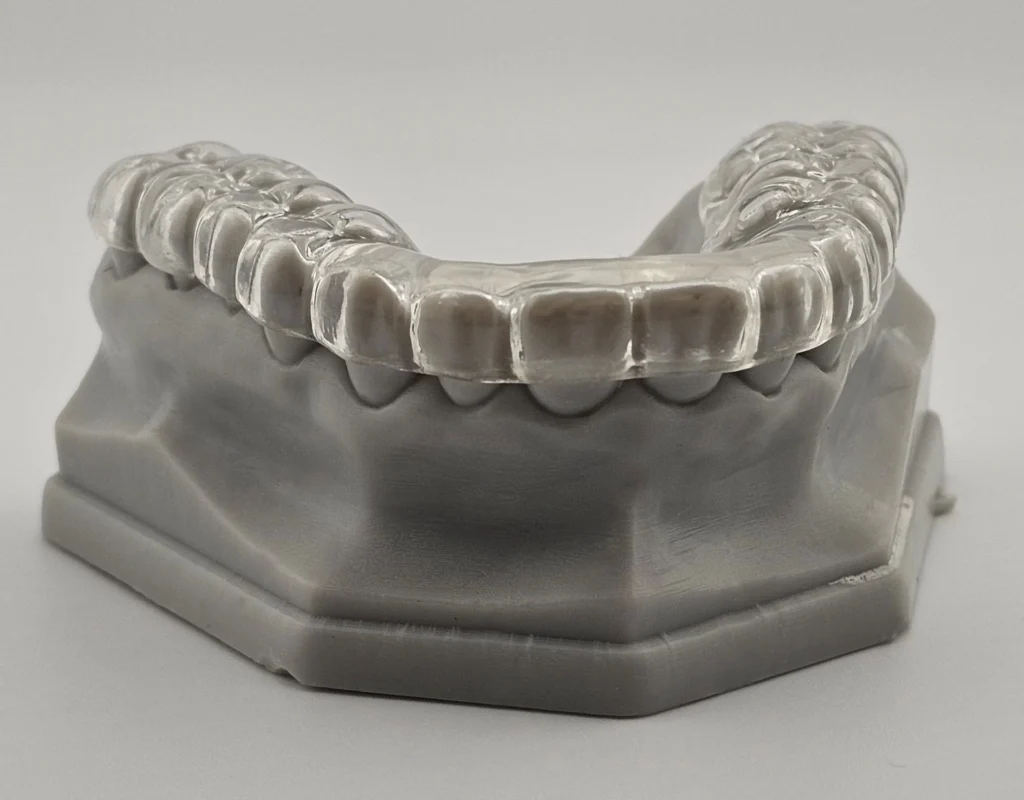
If the problem persists, a properly designed night guard can help protect the teeth from further damage.
The goal isn’t simply to give someone a night guard and move on. We need to understand why the teeth are wearing and how much damage has already occurred.
Acid Erosion Can Also Cause Sensitivity
Acid exposure can gradually weaken and dissolve enamel.
This can happen with frequent consumption of acidic drinks and foods, certain dietary habits, or other sources of acid exposure.
As the protective enamel becomes thinner, dentin may become exposed and sensitivity can develop.
In these cases, treatment involves more than managing the symptom. We need to identify the source of the acid exposure and modify the habits that are contributing to the erosion.
Depending on the amount of tooth structure lost, restorative treatment may eventually be necessary.
What About Cracked Teeth?
A crack can sometimes cause sensitivity, especially when the tooth is exposed to temperature changes or pressure.
Cracked teeth can be tricky because the symptoms can vary considerably from one patient to another.
A patient may experience sensitivity to cold, discomfort when biting, or pain when releasing a bite.
The extent and location of the crack need to be evaluated carefully before deciding on treatment.
This is another reason why I don’t recommend treating sensitivity without first establishing its cause.
Can a Bad Dental Restoration Cause Sensitivity?
Yes.
A defective or poorly fitting filling, crown, or other restoration can sometimes contribute to sensitivity.
The appropriate treatment depends on what is wrong with the restoration and the condition of the tooth underneath it.
Sometimes the restoration needs to be adjusted. In other cases, it needs to be replaced.
Again, the important thing is to treat the underlying problem rather than simply trying to suppress the symptom.
How Do I Know If My Tooth Sensitivity Is Normal?
Not all sensitivity means that something serious is happening.
For example, brief sensitivity to cold or sweet foods that disappears quickly can often be associated with exposed dentin, gum recession, enamel wear, erosion, or whitening.
However, there are certain patterns that make me more concerned.
Sensitivity that lingers
If the pain continues for a while after the hot or cold stimulus has been removed, the tooth may have inflammation affecting the dental pulp.
Pain that starts on its own
If a tooth starts hurting or feeling sensitive without anything triggering it, that is more concerning and deserves an examination.
Pain when biting
Pain when biting can sometimes indicate a crack or another problem that needs to be investigated.
Sensitivity in only one tooth
If you suddenly develop sensitivity in one particular tooth, I would not automatically assume that you simply have “sensitive teeth.” There may be a specific problem with that tooth.
These symptoms don’t automatically mean that you need a root canal. They mean that the tooth needs to be properly evaluated.
What Will Your Dentist Check?
When a patient tells me that their teeth are sensitive, I want to understand the pattern of the symptoms.
I will usually ask:
- Is it sensitive to cold?
- Is it sensitive to heat?
- Does sweet food trigger it?
- Does brushing trigger it?
- Does the pain disappear immediately or linger?
- Does it happen spontaneously?
- Is it one tooth or several?
- Does it hurt when you bite?
- Did it start after whitening or dental treatment?
Depending on the situation, clinical examination and dental X-rays or other diagnostic tests may be necessary.
The objective is simple:
Find the cause before choosing the treatment.
How Is Tooth Sensitivity Treated?
There is no single treatment for sensitive teeth because there is no single cause.
Depending on the diagnosis, treatment may include:
- Desensitizing toothpaste
- Fluoride or professional desensitizing treatments
- Improving brushing technique
- Treating gum disease
- Treating cavities
- Composite bonding over exposed dentin
- Replacing defective restorations
- Managing bruxism
- Using a night guard when indicated
- Modifying acidic dietary habits
- Adjusting or stopping whitening
- Periodontal treatment or gum grafting when appropriate
- Restorative treatment when significant tooth structure has been lost
I generally treat both sides of the problem: I want to stop the cause, but I also want to stop the patient from suffering.
There is no reason to tell a patient to simply tolerate discomfort while we wait for the underlying problem to be managed.
Don’t Over-Treat a Sensitive Tooth
One of the things I see from time to time is patients looking for a permanent solution to sensitivity and being told they need full crowns or even root canal treatment.
Sensitivity by itself is not a reason to put a crown on a tooth or perform a root canal.
A crown removes tooth structure. A root canal removes the dental pulp. Both can be excellent treatments when they are properly indicated, but they should not be used simply because a tooth is sensitive.
The same principle applies to any dental treatment:
Treat the problem, not just the symptom.
If the tooth can be treated conservatively, that should always be considered first.
When Should You See a Dentist for Sensitive Teeth?
You should have sensitive teeth evaluated if:
- The sensitivity is new or getting worse.
- The pain starts spontaneously.
- The pain lingers after eating or drinking something hot or cold.
- The tooth hurts when you bite.
- Only one particular tooth is sensitive.
- You can see a cavity, crack, gum recession, or defective restoration.
- The sensitivity does not improve with appropriate desensitizing toothpaste.
- You are experiencing significant sensitivity after whitening.
You don’t necessarily need to worry every time your teeth feel sensitive. But you also shouldn’t ignore a new or persistent symptom.
A simple examination can often determine whether the sensitivity is harmless and temporary or whether something needs treatment.
Frequently Asked Questions
Why are my teeth suddenly sensitive?
Sudden sensitivity can have several causes, including gum recession, enamel wear, cavities, cracks, whitening, acid erosion, bruxism, or a defective restoration. If the sensitivity is new or occurs spontaneously, it is worth having the tooth examined.
Can sensitive teeth heal on their own?
Some temporary sensitivity can improve, particularly after whitening or minor irritation. However, if the cause is a cavity, crack, gum recession, erosion, or another dental problem, treating the underlying cause is usually necessary.
Does sensitive teeth mean I need a root canal?
No. Tooth sensitivity alone does not mean you need a root canal. The pattern of pain and the results of a proper examination determine whether the dental pulp is involved.
Can I use sensitive toothpaste every day?
Desensitizing toothpaste can be very useful for managing certain types of sensitivity. However, if you continue to experience sensitivity despite using it appropriately, you should investigate the cause rather than simply using it indefinitely.
Why are my teeth sensitive after whitening?
Whitening can temporarily increase fluid movement through microscopic dentin tubules, causing sensitivity. This is very common and does not necessarily mean that the teeth have been damaged. Professional guidance can help reduce the intensity and duration of the sensitivity.
Can a cavity cause sensitivity to cold?
Yes. Cavities can cause sensitivity, particularly to cold and sweet foods. If the sensitivity is caused by decay, treating the cavity is necessary rather than simply masking the symptoms.
Can gum recession cause sensitive teeth?
Yes. Gum recession can expose the root surface and underlying dentin, making the tooth sensitive. Depending on the amount of exposure, treatment can range from desensitizing products to composite bonding or periodontal treatment and gum grafting.
Why do my teeth hurt when I bite?
Pain when biting can have several causes, including a cracked tooth, inflammation around the tooth, or other dental problems. It should be evaluated rather than assumed to be ordinary sensitivity.
Final Thoughts
Sensitive teeth are common, but they shouldn’t simply be dismissed.
Sometimes the solution is as simple as changing your brushing technique or using a desensitizing toothpaste. In other cases, the sensitivity may be the first sign of a cavity, crack, gum recession, enamel loss, or another problem that needs treatment.
And importantly, more aggressive treatment is not automatically better treatment.
You don’t need a crown simply because a tooth is sensitive. You don’t need a root canal simply because a tooth hurts.
The right approach is to understand why the tooth is sensitive, control the discomfort, and then treat the underlying cause as conservatively as possible.
The right diagnosis comes before the right treatment.