

When people hear the word prosthodontist, many immediately think of dentures.
But prosthodontics is much broader than that.
A prosthodontist specializes in restoring and replacing teeth, from a single damaged tooth to complex full-mouth rehabilitation. The specialty involves much more than simply placing a crown or veneer. It is about understanding the entire mouth, planning the final result, selecting the appropriate materials and restorations, and making sure the treatment works both functionally and aesthetically.
In many complex cases, the prosthodontist is the person who sees the final picture before treatment even begins.
What Is a Prosthodontist?
A prosthodontist is a dental specialist focused on restoring damaged, worn, missing, or aesthetically compromised teeth.
This can include:
- Crowns
- Veneers
- Bridges
- Dental implants and implant restorations
- Dentures
- Full-mouth rehabilitation
- Complex cosmetic cases
- Severely worn or broken teeth
- Cases involving multiple dental specialties
The important point is that prosthodontics isn’t limited to one type of restoration.
A prosthodontist understands different restorative options and, more importantly, when each option is appropriate.
A single tooth may require a relatively simple restoration. Another patient may require orthodontics, implants, periodontal treatment, multiple restorations, and careful management of their bite.
The prosthodontist’s role changes depending on the case.
A Prosthodontist Doesn’t Just Restore Teeth — They Plan the Case
One of the most important parts of prosthodontics is treatment planning.
Imagine a patient who has several missing teeth, damaged teeth, old restorations, aesthetic concerns, and an uneven bite.
The question isn’t simply:
“Which teeth need crowns?”
We need to ask much bigger questions:
- Which teeth can and should be saved?
- Which teeth have a poor prognosis?
- Where should implants be positioned?
- Does the patient need orthodontic treatment first?
- Which teeth should be restored?
- What should the final bite look like?
- Which materials are appropriate?
- How should the restorations be designed?
- How can the treatment remain biologically healthy and maintainable?
- What should the final smile look like?
These decisions can affect everything that comes afterward.
Sometimes orthodontics needs to happen before implants. Sometimes an implant needs to be positioned in a particular location because of the final restoration that will eventually sit on it.
This is why prosthodontic planning can be particularly important in multidisciplinary cases.
The prosthodontist is often thinking about the final restoration from the very beginning.
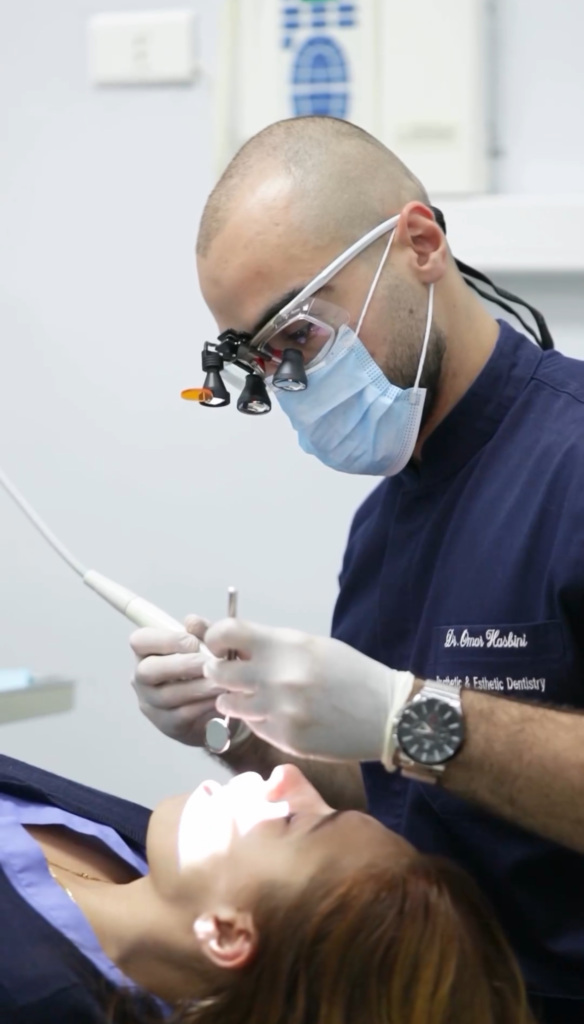
The Prosthodontist as the “Maestro” of a Complex Case
Complex dental treatment can involve several specialties.
A patient may need:
- Orthodontics
- Periodontal treatment
- Implant placement
- Endodontic treatment
- Oral surgery
- Restorative dentistry
Each specialist has an important role, but the treatments cannot always be planned independently.
The sequence matters.
For example, orthodontic movement can affect implant positioning. Implant positioning can affect the final crown. The final crown can affect the bite. The bite can affect the longevity of the entire rehabilitation.
This is where prosthodontic planning becomes particularly valuable.
The prosthodontist can help establish the final vision and coordinate the treatment sequence around it.
In a complex case, the goal isn’t simply to complete several individual procedures.
The goal is to make all those procedures work together.
What Materials Does a Prosthodontist Use?
There isn’t one material that is automatically best for every patient or every tooth.
Different materials have different characteristics in terms of:
- Strength
- Esthetics
- Translucency
- Bonding ability
- Wear characteristics
- Thickness requirements
- Resistance to functional forces
For example, a patient who strongly grinds or clenches their teeth may require a different restorative approach from someone with normal occlusal forces.
Some patients prioritize maximum esthetics. Others need a balance between esthetics and toughness.
And sometimes there is no reason to use exactly the same material for every tooth.
Material selection should be based on the individual tooth, the patient’s function, the occlusion, the esthetic requirements, and the overall treatment plan.
Even the design of the restoration itself is part of the prosthodontist’s planning.
The goal isn’t simply to choose a material.
It’s to choose the right material and the right design for the specific situation.
Why Is Your Bite So Important?
You can have beautiful crowns, veneers, bridges, or implant restorations — but if the bite is not properly controlled, problems can develop.
An unfavorable bite can contribute to excessive forces on restorations and potentially lead to:
- Veneer fractures
- Crown complications
- Bridge failures
- Implant complications
- Chipping
- Tooth fractures
- Excessive wear
This is why prosthodontics is not simply about making teeth look good.
Function matters.
Before restoring a patient, the way the teeth come together and function needs to be considered.
This becomes even more important in patients with bruxism, heavily worn teeth, multiple restorations, or full-mouth rehabilitation.
A beautiful restoration that cannot tolerate the forces placed on it is not a successful restoration.
Prosthodontics and Cosmetic Dentistry
A prosthodontist can also have extensive training and experience in cosmetic and aesthetic dentistry.
But good cosmetic dentistry isn’t simply about making teeth whiter.
A natural-looking smile involves many factors, including:
- Facial proportions
- Tooth proportions
- Tooth shape
- Smile line
- Lip dynamics
- Gum levels
- Tooth color
- Translucency
- Smile width
- Facial harmony
- The patient’s individual expectations
Modern digital tools can also help with this process.
Photography, digital smile design, intraoral scanning, digital planning, and mock-ups can help us visualize the proposed result before definitive treatment begins.
The goal isn’t to create a generic “perfect smile.”
It is to create a smile that fits the individual patient.
Prosthodontics Is About More Than Esthetics
One of the biggest misconceptions about cosmetic dentistry is that the most beautiful result is automatically the best result.
It isn’t.
A successful prosthodontic treatment needs to respect three important elements:
Esthetics
The restorations should look natural and harmonious with the patient’s face.
Function
The teeth need to work properly and tolerate the forces placed on them.
Biology
The treatment needs to respect the teeth, gums, bone, and surrounding tissues.
Ignoring one of these three can compromise the treatment.
A restoration can be beautiful but biologically problematic.
It can be strong but aesthetically poor.
It can look excellent but fail because the functional forces were not properly controlled.
The goal is to bring all three together.
When Should You See a Prosthodontist?
You don’t have to wait until you have a complicated full-mouth problem.
A prosthodontist can be involved in anything from a single tooth to a complete rehabilitation.
You may benefit from a prosthodontic evaluation if you have:
- A severely damaged tooth
- Multiple missing teeth
- Teeth that repeatedly fracture
- Multiple old or failing restorations
- Dental implants
- Extensive crowns or bridges
- Significant tooth wear
- A complicated bite
- Aesthetic concerns involving several teeth
- A combination of functional and cosmetic problems
- A treatment plan involving several dental specialties
- A need for full-mouth rehabilitation
The more components involved in a case, the more important comprehensive planning becomes.
Why See a Prosthodontist for Implant Treatment?
An implant is not the final treatment.
The crown or prosthesis that sits on the implant is what ultimately needs to function and look like a tooth.
For this reason, implant treatment should ideally be planned with the final restoration in mind.
In a complex implant case, the prosthodontist may help determine:
- Which teeth should be preserved
- Which teeth may need extraction
- Where implants would ideally be positioned
- How many implants are needed
- Whether orthodontics should happen first
- What type of restoration will eventually be used
- How the bite should be managed
- What the final esthetic result should look like
This is the concept of prosthetically driven treatment planning: the implant and surgical treatment are planned around the final restorative goal, rather than placing implants without considering what comes afterward.
Does a Prosthodontist Only Treat Complicated Cases?
No.
A prosthodontist can treat a single tooth just as they can treat a full-mouth rehabilitation.
The complexity of the case determines the level of planning required.
A single crown may be straightforward, but even then, factors such as tooth preparation, occlusion, material selection, esthetics, and long-term prognosis matter.
In a complex case, all of these decisions become interconnected.
That’s why prosthodontics isn’t simply about treating “big cases.”
It’s about understanding how to restore teeth properly and how different restorative decisions affect the entire mouth.
Prosthodontist vs. General Dentist: What’s the Difference?
General dentists provide a broad range of dental care, including preventive, restorative, and routine treatments.
A prosthodontist has specialized training focused specifically on restoring and replacing teeth, including complex restorative and reconstructive cases.
This additional expertise becomes particularly valuable when a patient has multiple restorative problems or when several specialties need to work together.
It’s not about saying that one dentist is better than another.
It’s about choosing the right level of expertise for the complexity of the problem.
The Goal Is Not Just to Replace Teeth
One of the most important things I want patients to understand is that prosthodontics is not simply about replacing a missing tooth or putting a crown on a damaged one.
The bigger question is:
What is the best long-term treatment for this particular patient?
Sometimes that means preserving a natural tooth.
Sometimes it means restoring it.
Sometimes it means an implant.
Sometimes orthodontics needs to happen first.
Sometimes several treatments need to be coordinated.
And sometimes the best treatment is not the most aggressive treatment.
The goal is to understand the entire situation before deciding what to do.
My Philosophy as a Prosthodontist
My goal isn’t simply to replace teeth or make them look beautiful.
I want to understand the entire situation, preserve what can be preserved, choose the right treatment and materials, and create a result that works biologically, functionally, and aesthetically for the long term.
I see the prosthodontist as the person who has the final vision of the case and can help coordinate the different steps needed to reach that vision.
Because ultimately, successful dentistry isn’t about doing more treatment.
It’s about doing the right treatment, in the right sequence, for the right patient.
Frequently Asked Questions
What is a prosthodontist?
A prosthodontist is a dental specialist focused on restoring and replacing teeth. They treat everything from individual damaged teeth to complex full-mouth rehabilitations involving crowns, veneers, bridges, implants, and dentures.
Is a prosthodontist only for dentures?
No. Dentures are only one part of prosthodontics. Prosthodontists also specialize in crowns, veneers, bridges, implant restorations, cosmetic dentistry, tooth wear, and complex restorative cases.
Should I see a prosthodontist for dental implants?
A prosthodontist can be particularly valuable for implant cases because implant placement should be planned around the final restoration. This is especially important when several teeth are missing or when orthodontics and other treatments are also involved.
Can a prosthodontist do cosmetic dentistry?
Yes. Prosthodontics includes extensive training in restorative and aesthetic treatment. Cosmetic cases should consider not only tooth color and shape but also facial proportions, function, occlusion, gum health, and long-term stability.
Can a prosthodontist treat one tooth?
Absolutely. Prosthodontics can involve something as simple as restoring one damaged tooth or as complex as reconstructing an entire mouth.
Does a prosthodontist work with other specialists?
Yes. Complex cases may involve orthodontists, periodontists, endodontists, and oral surgeons. The prosthodontist can help establish the final restorative goal and determine the appropriate sequence of treatment.
Final Thoughts
A prosthodontist is not simply a dentist who makes crowns or dentures.
Prosthodontics is about restoring the mouth as a whole, understanding how esthetics, function, biology, materials, and occlusion interact, and planning treatment with the final result in mind.
Whether you need one restoration or a complete rehabilitation, the most important question is not:
“What procedure do I need?”
It is:
“What is the right treatment plan for me?”
And that is where prosthodontic thinking becomes valuable.