
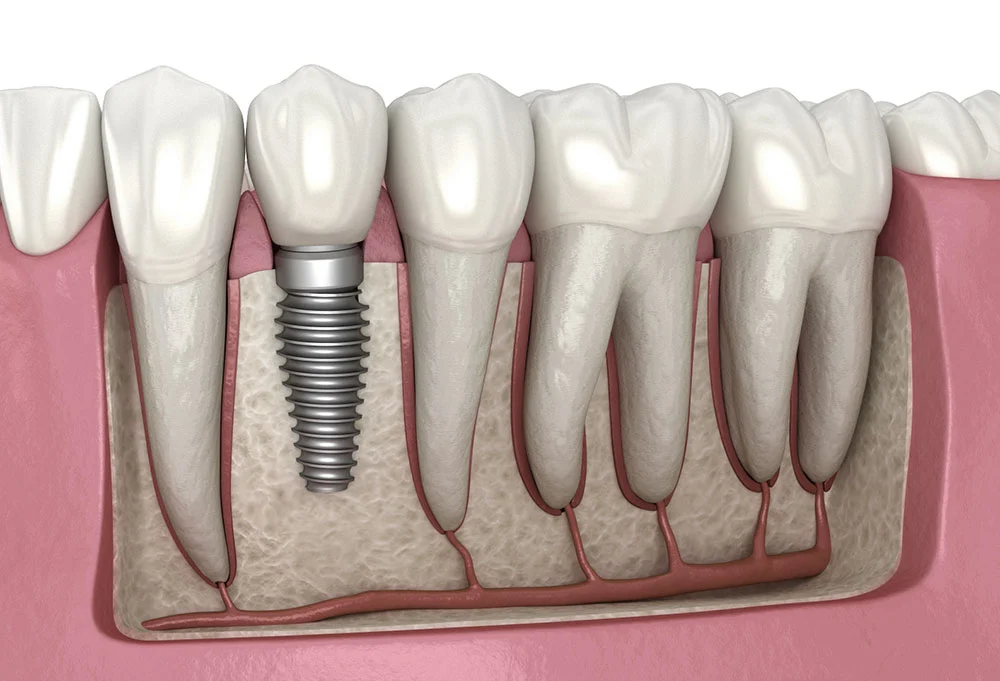
Is It Better to Save a Tooth or Replace It with a Dental Implant?
One of the most common questions I hear from patients is:
“Doctor, should we save my tooth or remove it and place an implant?”
Many people believe that dental implants are better than natural teeth.
The truth is more nuanced.
At Smile Avenue Dental Clinic, our philosophy is simple:
If a natural tooth has a good long-term prognosis and saving it benefits the patient, we will always try to preserve it.
However, there are situations where extracting a tooth and replacing it with a dental implant provides a healthier, more predictable, and longer-lasting solution.
The key is making the right decision before treatment begins.
My Philosophy: Save the Tooth Whenever It Makes Sense
Nothing can truly replace a healthy natural tooth.
Natural teeth have biological and functional advantages that no dental implant can completely reproduce.
That is why preserving your own tooth is usually our first choice.
However, dentistry is not black and white.
Sometimes, saving a tooth is not in the patient’s best interest.
For example, a patient who needs a complete denture but has only one severely compromised tooth remaining may actually benefit from removing that tooth. Keeping it could reduce the stability and function of the denture.
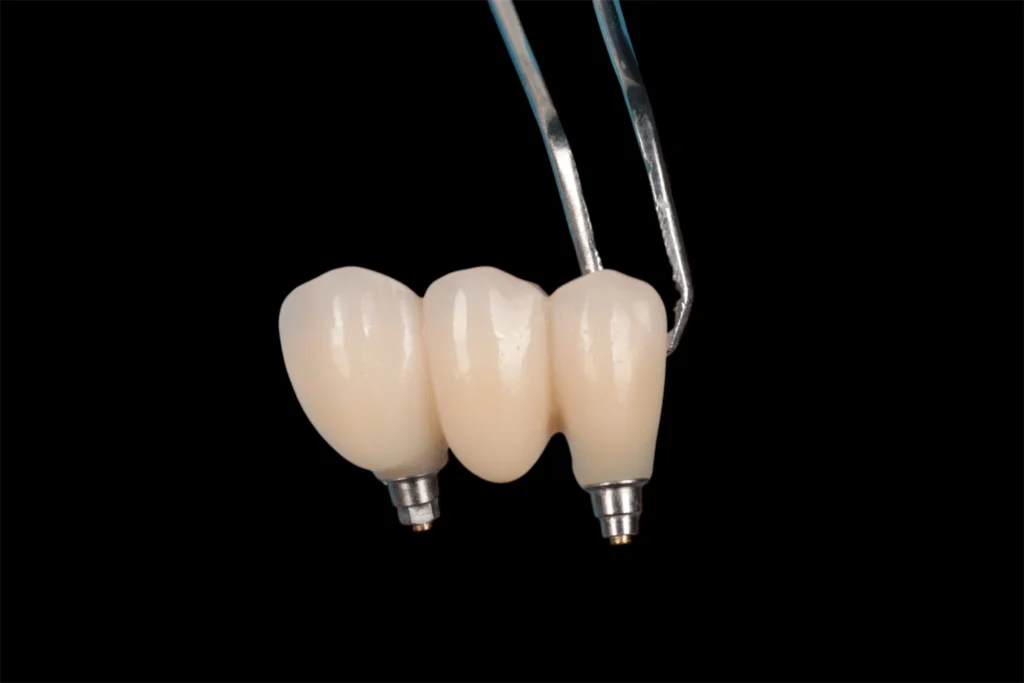
Another example is a weakened tooth located between two healthy implants. In certain cases, removing that tooth allows us to fabricate a stronger and more predictable implant-supported bridge.
These situations are known as strategic extractions.
A strategic extraction is not performed because the tooth cannot technically be saved. It is performed because removing it provides the patient with a better overall functional and long-term outcome.
Our goal is never to save or extract a tooth at all costs.
Our goal is to recommend the treatment that offers the greatest long-term benefit for the patient.
How Do We Decide Whether a Tooth Can Be Saved?
Every tooth deserves a thorough evaluation before recommending extraction.
At Smile Avenue Dental Clinic, we evaluate much more than a simple X-ray.
Remaining Tooth Structure
One of the first questions we ask is:
Is there enough healthy tooth remaining to support a long-lasting restoration?
A tooth with sufficient remaining structure and an adequate ferrule has a much better prognosis than one that is severely broken down.
Can the Tooth Be Properly Isolated?
This is one of the most overlooked factors.
If decay extends deep below the gum line, achieving proper isolation during treatment may become impossible.
Without proper isolation, it is difficult to perform predictable adhesive dentistry or high-quality root canal treatment.
Sometimes crown lengthening or orthodontic extrusion can expose enough healthy tooth structure.
Other times, extraction becomes the more predictable solution.
Periodontal Health
We carefully evaluate:
- Bone support
- Gum health
- Tooth mobility
- Crown-to-root ratio
Even a restorable tooth may not be worth saving if its periodontal support is severely compromised.
Root Condition
We assess:
- Vertical root fractures
- Root resorption
- Previous root canal treatment
- Persistent infection
- Root anatomy
Some conditions, such as a vertical root fracture, usually make the tooth non-restorable.
Functional Factors
Every tooth must function within a healthy bite.
We evaluate:
- Occlusion
- Bruxism
- Chewing forces
- The strategic importance of the tooth in the overall treatment plan
Sometimes the decision depends not only on the tooth itself, but also on how it contributes to the patient’s complete rehabilitation.
Patient Factors
Every patient is different.
We also consider:
- Age
- Oral hygiene
- Medical history
- Motivation
- Long-term maintenance
- Patient expectations
The same tooth may have a very different prognosis in two different patients.
When Can a Tooth No Longer Be Saved?
Although preserving natural teeth is always our priority, there are situations where extraction provides the most predictable outcome.
These include:
- Vertical root fractures
- Extensive deep decay extending below the gum line
- Teeth that cannot be properly isolated
- Severe periodontal bone loss
- Advanced tooth mobility
- Large root perforations
- Failed root canal treatments with poor retreatment prognosis
- Severe internal or external root resorption
- Split teeth
- Insufficient remaining tooth structure, even after considering crown lengthening or orthodontic extrusion
The decision is never based on a single factor.
Instead, we evaluate whether restoring the tooth will genuinely benefit the patient over the long term.
Why Is It Better to Save a Natural Tooth Whenever Possible?
When a tooth has a good long-term prognosis, nothing is better than keeping your natural tooth.
Natural Sensation
Natural teeth are attached to the bone by the periodontal ligament.
This ligament contains thousands of nerve endings that allow you to feel pressure, food texture, and tiny changes in your bite.
This natural sensation, called proprioception, helps protect your teeth while chewing.
Dental implants function exceptionally well, but they cannot fully reproduce this natural feedback system.
Preserving Your Natural Biology
Saving your own tooth preserves your natural anatomy and often avoids surgery.
If the tooth can be predictably restored, preserving it is usually the most conservative option.
Avoiding the Restorative Cycle
This is one of the most important concepts I explain to my patients.
The moment a tooth is extracted, you begin a restorative cycle.
That missing tooth will usually need to be replaced with:
- A dental implant
- A dental bridge
- Or, in some situations, a removable denture
Although these treatments are highly successful, no dental restoration lasts forever.
Crowns may eventually require replacement.
Bridges can fail.
Even dental implants require maintenance and, in some cases, additional treatment over time.
By preserving a healthy natural tooth whenever possible, we delay this restorative cycle and maintain your own dentition for as long as possible.
When Is a Dental Implant the Better Choice?
Although preserving natural teeth is usually the preferred option, there are situations where a dental implant offers a more predictable long-term solution.
Sometimes I tell my patients:
“Yes, we may be able to save this tooth, but I don’t believe it’s the best investment for you.”
A tooth may technically be restorable but still have a poor long-term prognosis.
For example, if a tooth is severely weakened, has minimal remaining tooth structure, or requires multiple complex procedures with an uncertain outcome, continuing to invest time and money may not be in the patient’s best interest.
In these situations, I ask myself one important question:
Am I helping the patient by saving this tooth, or am I simply delaying the inevitable?
If I believe the prognosis is poor, I would rather recommend a treatment with a more predictable long-term outcome.
This doesn’t mean implants are better than natural teeth.
It means that a healthy dental implant is often better than a severely compromised natural tooth with a poor prognosis.
Do Dental Implants Require Less Maintenance?
Absolutely not.
One of the biggest myths in dentistry is that implants are maintenance-free.
Whether you save your tooth with a root canal and crown or replace it with an implant, both require the same level of care.
I always tell my patients:
“Take care of your implant exactly as you would take care of your natural tooth.”
That means:
- Brushing twice daily
- Flossing every day
- Regular professional cleanings
- Routine dental examinations
- Wearing a night guard if you grind your teeth
- Maintaining healthy gums
- Avoiding smoking whenever possible
Dental implants cannot develop cavities.
However, they can develop peri-implant diseases such as peri-implant mucositis and peri-implantitis, which may lead to bone loss and implant failure if left untreated.
Natural teeth and implants simply face different biological challenges.
Both deserve lifelong maintenance.
Frequently Asked Questions
Is a natural tooth better than a dental implant?
In most situations, yes. If a tooth has a good long-term prognosis, preserving it is usually the preferred option because nothing fully replaces the biology and function of a healthy natural tooth.
Can every damaged tooth be saved?
No. Some teeth have extensive decay, vertical root fractures, severe periodontal disease, or insufficient remaining structure, making extraction the most predictable solution.
Is a root canal better than an implant?
If a tooth can be predictably restored, saving it with root canal treatment is often preferable. If the prognosis is poor, an implant may provide a better long-term outcome.
Do dental implants last forever?
No. Dental implants have excellent success rates, but they still require lifelong maintenance and may need repair or replacement over time.
Do implants require the same care as natural teeth?
Yes. Daily brushing, flossing, regular cleanings, and routine dental visits are essential for both natural teeth and implants.
Can I choose an implant even if my tooth can be saved?
Technically, yes. However, treatment recommendations should always be based on the long-term prognosis rather than convenience alone.
My Advice to Patients
Patients often ask me:
“Doctor, if this were your own tooth, what would you do?”
My answer is always honest.
If I believe the tooth has a good long-term prognosis, I would do everything reasonably possible to save it.
A healthy natural tooth preserves your biology, gives you natural sensation during chewing, and delays the restorative cycle that begins once a tooth is extracted.
However, if I believe the tooth is structurally compromised, has a poor long-term prognosis, or will require significant time and financial investment with an unpredictable outcome, I would choose a dental implant.
I don’t recommend treatments simply because they are technically possible.
I recommend the treatment that I genuinely believe offers the best long-term outcome for my patient.
Sometimes that means saving the tooth.
Sometimes that means replacing it with an implant.
The most important decision is not whether to perform a root canal or place an implant.
The most important decision is choosing the treatment that gives you the healthiest, most functional, and most predictable result for years to come.
Final Thoughts
Choosing between saving a natural tooth and replacing it with a dental implant is one of the most important decisions in dentistry.
There is no universal answer.
Every tooth deserves a careful evaluation based on its condition, restorability, periodontal health, function, and long-term prognosis.
At Smile Avenue Dental Clinic, we believe in conservative, evidence-based dentistry. We preserve what can be predictably saved, replace what cannot, and always choose the treatment that serves the patient’s best long-term interests.