Teeth whitening is one of the most requested aesthetic treatments today, especially in Lebanon where patients are constantly exposed to pharmacy products, social media ads, and “quick smile transformation” kits.
The promise is always attractive: whiter teeth at home, fast results, and low cost.
But clinically, the real question is not whether these kits whiten teeth—it is whether they are safe for your teeth, gums, and long-term oral health.
From daily clinical experience, most commercial at-home whitening kits available in Lebanon are either ineffective or potentially harmful when used without dental supervision.
Clinical Background / How These Kits Work
Whitening kits generally rely on peroxide-based agents that penetrate enamel and break down pigments responsible for discoloration.
However, the safety and effectiveness depend on three critical factors:
- Concentration of the whitening agent
- Duration and frequency of use
- Application method and tray adaptation
In professional dentistry, all three are controlled. In commercial kits sold in pharmacies or online, they are not.
This lack of control is where most problems begin.
Risks and Complications (Clinical Experience Included)
1. Tooth sensitivity from high concentrations
Many of the “effective” kits use relatively high concentrations of whitening agents to compensate for the lack of professional control.
This often leads to:
- Increased tooth sensitivity
- Pain during cold or hot intake
- Temporary or prolonged enamel hypersensitivity
2. Gum burns from poor adaptation
Unlike dentist-made trays, commercial products use:
- Generic trays
- Strips
- One-size-fits-all applicators
This allows whitening gel to leak onto the gums, causing:
- Chemical irritation
- Burning lesions
- Painful inflammation
Repeated exposure can, in some cases, contribute to gingival recession.
3. Worsening of underlying dental problems
Without prior examination, whitening may be done on:
- Untreated caries
- Teeth requiring root canal treatment
- Periodontally compromised teeth
This can significantly worsen existing conditions.
Clinical Case Experience
In my practice:
- A patient developed gingival burns after using whitening strips due to improper adaptation and direct gum contact.
- Another patient experienced significant tooth sensitivity after using a commercially available whitening gel without prior dental evaluation.
These cases highlight a key point: the risk comes not only from the product, but from lack of supervision and diagnosis.
Dentist Insight: Why Supervised Whitening Is Safer
Professional whitening changes everything because it is controlled.
Dentists:
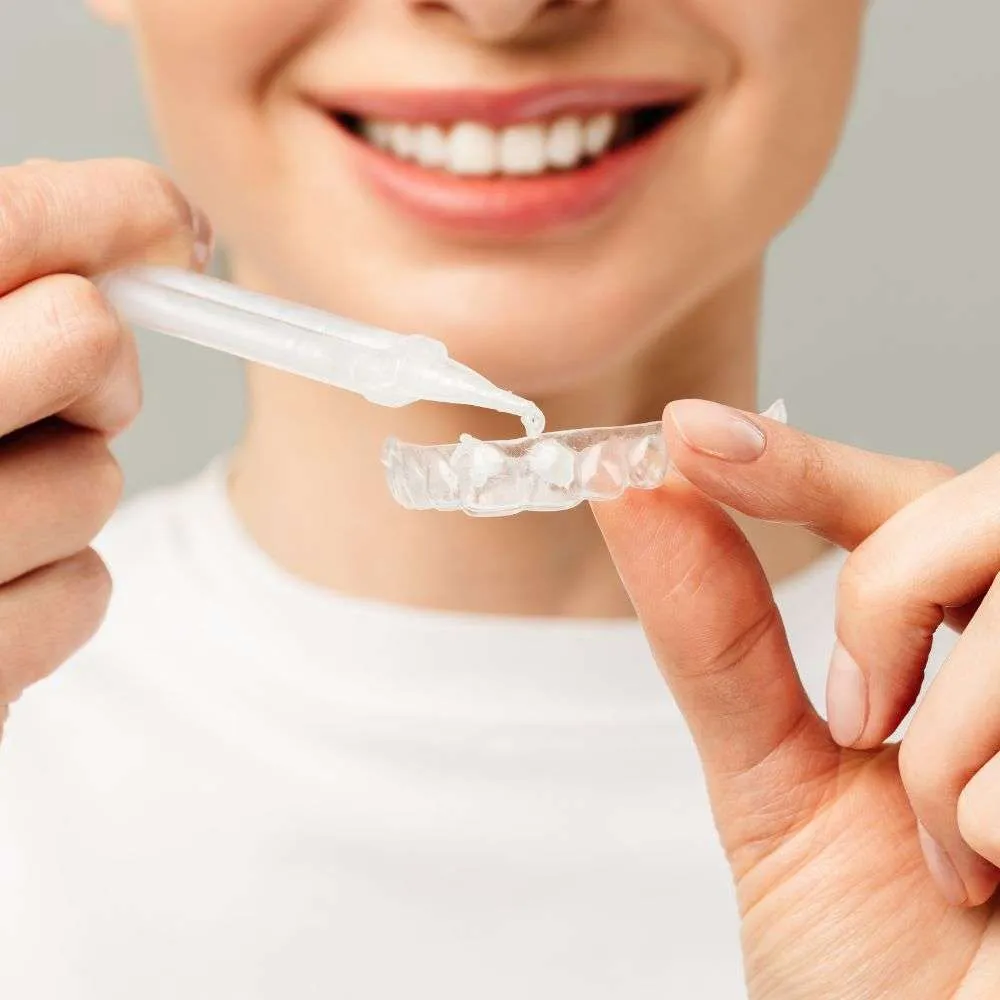
- Take impressions to fabricate custom trays
- Ensure the gel stays on teeth and away from gums
- Adjust concentration based on sensitivity and dental history
This makes the process significantly safer and more predictable.
Contraindications (Who Should NOT Whiten Yet)
Whitening should be postponed in patients with:
- Active caries
- Periodontal disease
- Teeth requiring root canal treatment
- Certain restorations (crowns, large fillings)
Safe Alternatives in Lebanon
- Dentist-supervised at-home whitening kits
- In-office whitening (laser or professional systems)
Both options provide:
- Better safety control
- More predictable results
- Lower risk of complications
Patient Advice
Always consult your dentist before using any whitening product.
Both:
- Chemical composition
- Concentration level
must be evaluated according to your oral health.
A whiter smile should never come at the expense of comfort or long-term dental health.
FAQ
Are whitening kits in Lebanon safe?
Most are either ineffective or risky when used without supervision.
Why do they cause sensitivity?
High peroxide concentrations can irritate enamel and dental nerves.
Can strips burn gums?
Yes, especially due to poor adaptation and leakage.
What is the safest whitening method?
Dentist-supervised whitening with custom trays or in-office treatment.
Should whitening be done with cavities present?
No, cavities must be treated first.
At Smile Avenue Dental Clinic in Beirut, we focus on achieving aesthetic results without compromising oral health.
Every whitening case is evaluated clinically to ensure safety, predictability, and long-term stability.
If you are considering whitening, a professional consultation is the safest first step toward a healthier, brighter smile.