
Does Teeth Whitening Cause Sensitivity?
One of the most common questions patients ask before whitening their teeth is:
“Will my teeth become sensitive?”
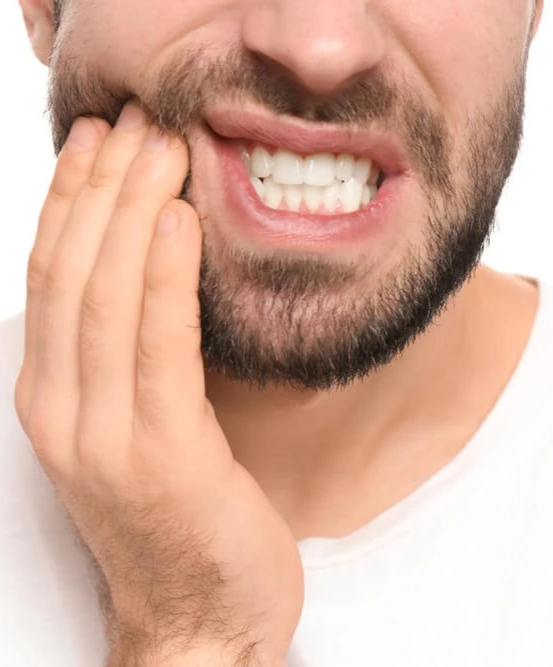
The short answer is yes, temporary sensitivity can happen, but it is usually mild, short-lived, and completely manageable.
At Smile Avenue Dental Clinic in Beirut, we follow evidence-based whitening protocols to minimize sensitivity while achieving excellent whitening results.
Understanding why sensitivity occurs can help you feel more confident about the procedure.
Why Does Teeth Whitening Cause Sensitivity?
Professional whitening works by breaking down the pigment molecules responsible for the yellow or dark color inside your teeth.
During this process, tiny microscopic channels inside the tooth, called dentinal tubules, temporarily become more permeable.
This is a normal and expected reaction.
Because these tubules are temporarily more open, some patients experience temporary sensitivity to cold or air.
The important point is that this effect is temporary and the tooth returns to normal afterward.
How Common Is Whitening Sensitivity?
Approximately 50% of patients experience some degree of sensitivity after whitening.
However, every patient is different.
Some people feel almost nothing.
Others experience mild temporary sensitivity.
Fortunately, in the vast majority of cases:
- The discomfort is very bearable.
- It can be managed with paracetamol if necessary.
- It usually disappears within 24 hours.
What Increases the Risk of Sensitivity?
Sensitivity depends on both the dentist and the patient.
Dentist-Related Factors
A safe whitening procedure depends on:
- Proper case selection
- Using the correct whitening protocol
- Avoiding excessive whitening
- Applying desensitizing agents when indicated
The whitening protocol is just as important as the whitening product itself.
Patient-Related Factors
Some patients are naturally more likely to experience sensitivity, including those with:
- Existing tooth sensitivity
- Cavities
- Exposed roots
- Gum recession
- Enamel wear
- Cracked teeth
These conditions should always be evaluated before whitening.
How We Reduce Sensitivity at Smile Avenue
At Smile Avenue, preventing sensitivity begins before the whitening session.
Our protocol includes:
Comprehensive Examination
We first determine whether whitening is appropriate for your case.
Treating Dental Problems First
If cavities, leaking restorations, or other active dental problems are present, they are treated before whitening.
Protecting the Gums
For patients with gum recession or exposed roots, we carefully protect the soft tissues using a gingival barrier during treatment.
Using High-Quality Whitening Products
We use FDA-approved whitening products from internationally recognized brands with appropriate concentrations to ensure both safety and effectiveness.
Follow-Up Care
We follow up with our patients after treatment to ensure they are comfortable and satisfied with the results.
Who Is More Likely to Experience Sensitivity?
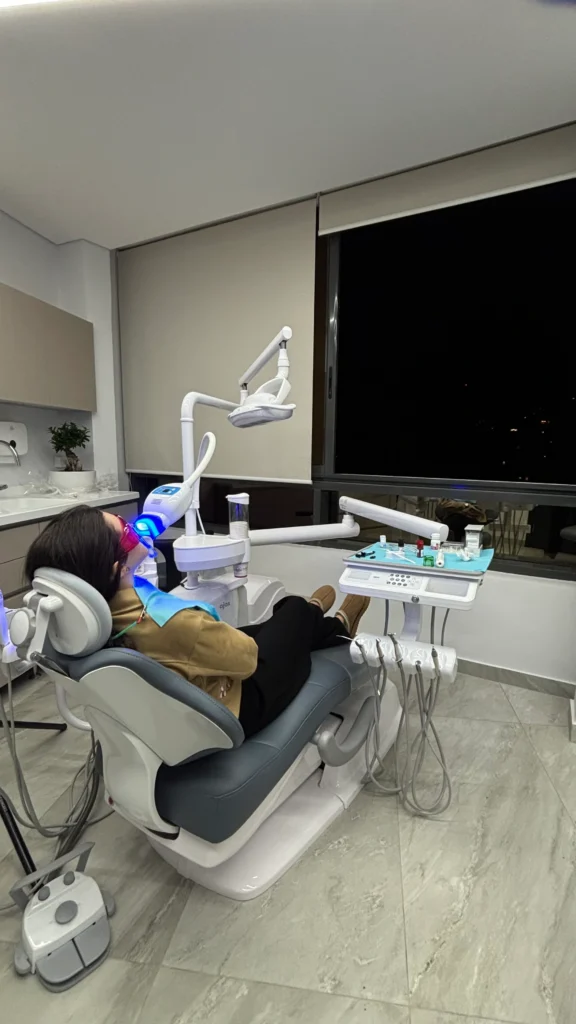
Sensitivity is more common in patients with:
- Naturally sensitive teeth
- Gum recession
- Exposed roots
- Enamel wear
- Cracked teeth
- Previous whitening treatments
This does not necessarily mean whitening cannot be performed.
It simply means the treatment plan should be adapted accordingly.
Who Should Delay Teeth Whitening?
Whitening should usually be postponed if you have:
- Active cavities
- Gum disease
- Tooth infections
- Broken or leaking restorations
- Undiagnosed severe sensitivity
Treating these conditions first leads to a safer and more comfortable whitening experience.
The Biggest Mistakes That Increase Sensitivity
Many cases of severe sensitivity are caused by improper whitening rather than professional treatment.
Common mistakes include:
- Buying high-concentration whitening products online without dental supervision
- Using whitening strips too frequently
- Whitening repeatedly without allowing adequate time between treatments
Professional supervision greatly reduces these risks.
What If I’m Afraid of Whitening Sensitivity?
If sensitivity is your biggest concern, don’t let it stop you from improving your smile.
At Smile Avenue, we:
- Take every precaution to minimize sensitivity
- Use safe, scientifically validated whitening protocols
- Apply desensitizing agents when indicated
- Choose the appropriate treatment for each patient
If sensitivity occurs, it is usually mild, temporary, and very manageable.
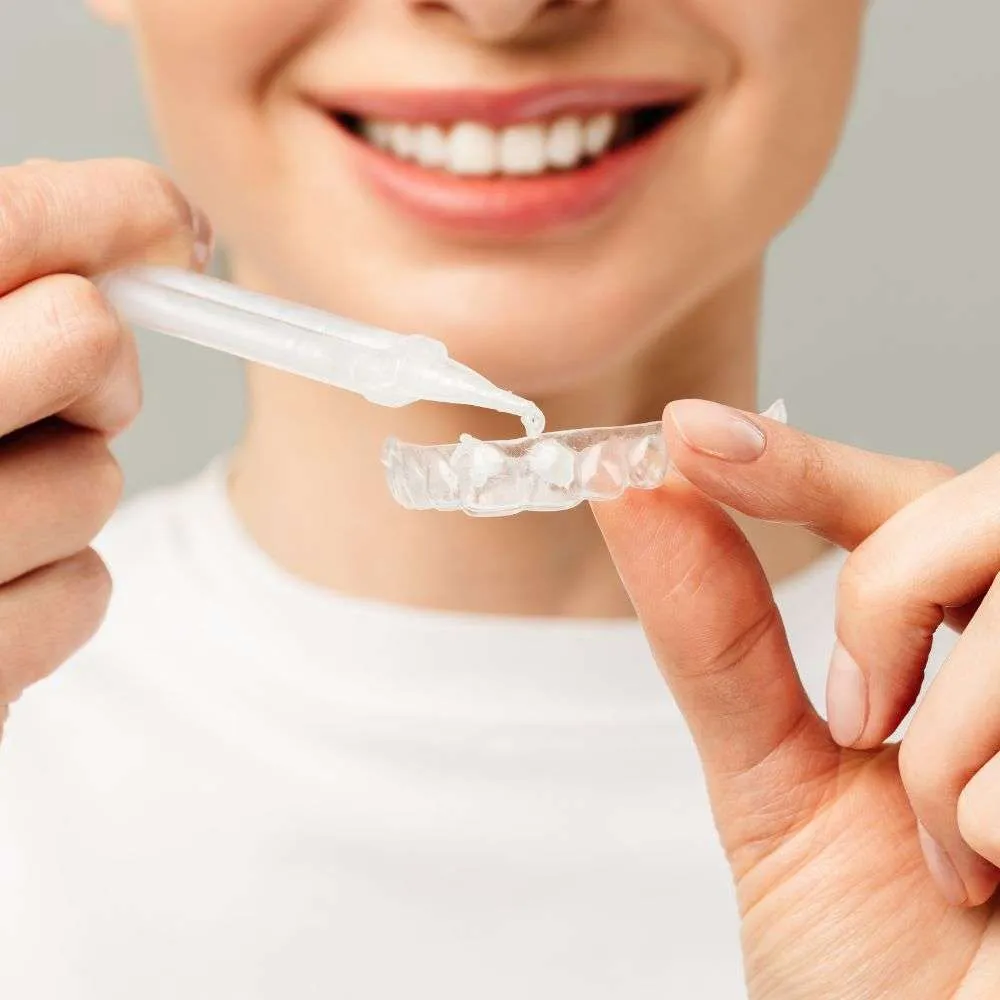
For patients with naturally sensitive teeth, we may recommend a customized at-home whitening kit with a lower whitening concentration, allowing a gentler whitening process.
Frequently Asked Questions
Will Everyone Experience Sensitivity?
No.
Approximately half of patients experience some temporary sensitivity, while many experience little or none.
Can I Whiten My Teeth If They Are Already Sensitive?
Yes, in many cases.
Patients with sensitive teeth may benefit from customized at-home whitening using lower-concentration whitening gels.
How Long Do Whitening Results Last?
Results generally last 1 to 2 years, depending on oral hygiene and the consumption of staining foods and drinks such as coffee, tea, red wine, and tobacco.
Does Whitening Damage My Teeth?
No.
Professional whitening performed with appropriate products and protocols does not damage healthy teeth.
Can I Eat Normally After Whitening?
Yes.
Your dentist may recommend avoiding strongly colored foods and beverages for a short period after treatment, but you can otherwise return to your normal routine.
What Should I Do If My Teeth Become Sensitive?
In most cases, nothing special is required.
The sensitivity usually resolves on its own within 24 hours.
If necessary, simple pain medication such as paracetamol can help.
Final Thoughts
Temporary sensitivity is a normal part of the whitening process for some patients, but it should not discourage you from achieving a brighter smile.
With proper diagnosis, safe whitening products, careful technique, and the right protocol, sensitivity can be minimized while delivering excellent results.
At Smile Avenue Dental Clinic, patient comfort is always our priority.
Our goal is simple:
A whiter smile with the safest possible experience.